Meta’s $1.4 Billion Wake-Up Call
On July 30, 2024, Meta agreed to pay Texas a $1.4 billion settlement for illegally scanning and storing the facial geometry of millions of Texans without their consent. This is the largest privacy settlement ever secured by a single state in the U.S.
Meta’s Tag Suggestions feature automatically analyzed facial features in uploaded photos for over a decade, building what Texas Attorney General Ken Paxton called an “artificial intelligence empire” using Texans’ biometric data without permission.
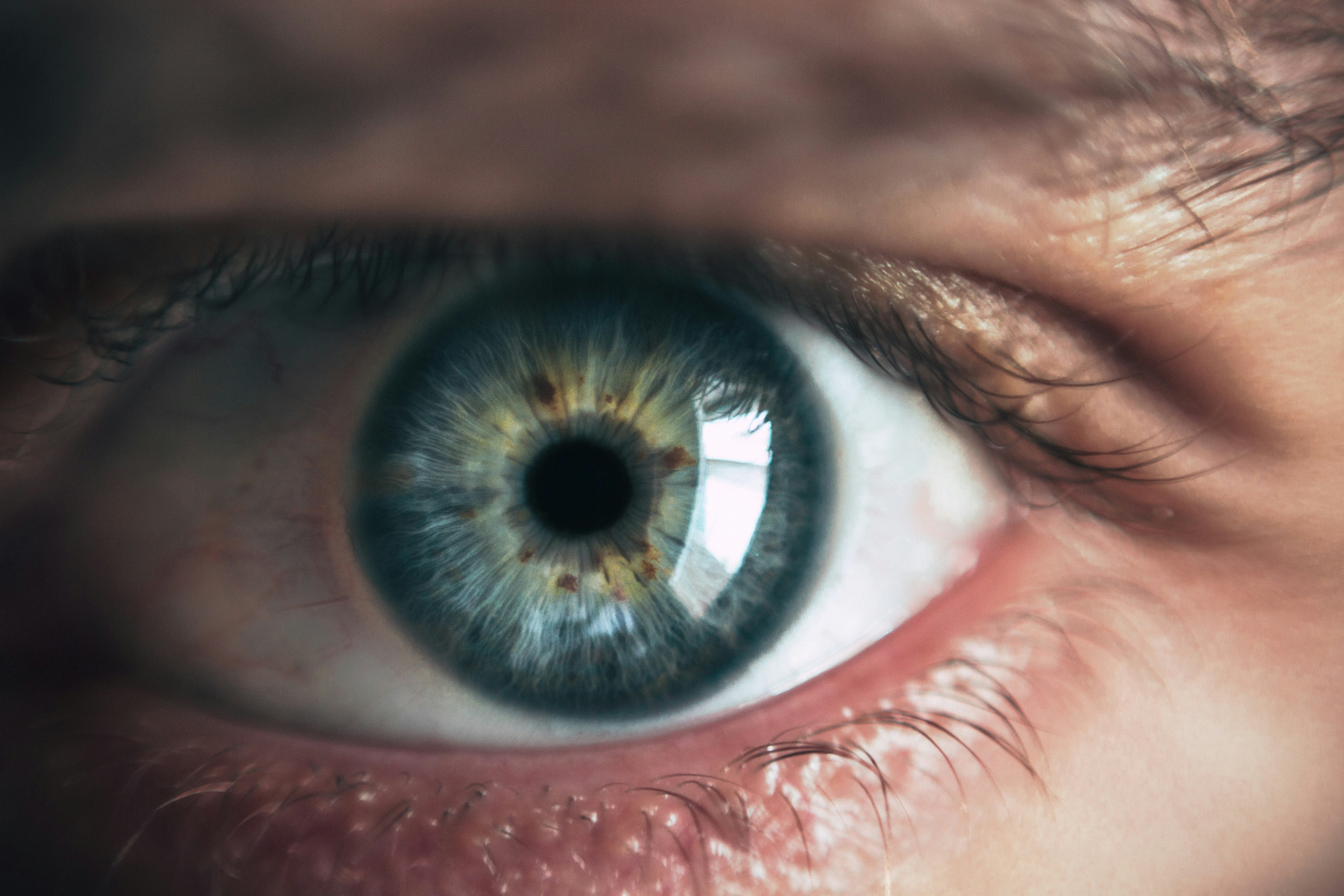
But facial recognition is just the beginning. While Meta paid for scanning faces, companies like Sam Altman’s World are now targeting an even more valuable biometric: your irises. With over 5 million people already scanned globally and a recent U.S. launch in six cities, World offers cryptocurrency tokens in exchange for permanent iris scans. The timing isn’t coincidental. Artificial intelligence makes it increasingly difficult to distinguish humans from bots online so tech companies see biometric authentication as the ultimate solution to digital identity verification.
TikTok paid $92 million in 2021 to settle claims it violated Illinois’s biometric privacy laws by collecting facial recognition data without consent. Meanwhile, China’s Ministry of State Security has warned that iris-scanning crypto projects like World which is co-founded by Sam Altman pose national security risks, with officials cautioning that biometric data collection could enable surveillance and espionage. These massive legal settlements and government warnings reveal that biometric data collection has already reached a scale that threatens fundamental privacy rights and national sovereignty.
Key TAkeaways
- Tech companies are investing billions in eye-scanning technology to create the most accurate biometric identification system ever developed, with iris recognition achieving 99.59% accuracy rates in government testing.
- Biometric surveillance enables unprecedented personalized advertising and behavioral tracking, allowing companies to monitor emotional responses, attention patterns, and physical characteristics in real-time.
- The irreversible nature of biometric data creates permanent privacy risks, unlike passwords, your iris patterns cannot be changed if compromised, making data breaches catastrophic for individual privacy and security.
Why Eyes Are the Ultimate Prize

Tech companies are racing to scan eyeballs because iris recognition has become the holy grail of biometric authentication. According to the National Institute of Standards and Technology (NIST), which conducts the world’s most authoritative biometric testing, iris recognition systems achieve accuracy rates of 99.59% for identification among 500,000 people significantly outperforming facial recognition and other biometric methods. NEC Corporation, which ranked first in recent NIST testing, demonstrated that iris recognition with both eyes can achieve 99.76% accuracy, with false identification rates as low as 0.0033.
The technological advances driving this biometric revolution stem from machine learning and computer vision breakthroughs. Modern iris recognition systems use infrared cameras to capture detailed images of the iris’s complex patterns, including furrows, crypts, and rings that remain stable throughout a person’s lifetime. Unlike fingerprints, which can be damaged, or faces, which change with age, iris patterns are immutable biological signatures that provide unparalleled security.
Computer vision algorithms, particularly convolutional neural networks (CNNs) and deep learning models, have transformed how these systems analyze biometric data. These AI-powered systems can process iris scans in real-time, comparing captured patterns against massive databases in seconds. The integration of artificial intelligence enables biometric systems to adapt to varying lighting conditions, detect liveness to prevent spoofing, and continuously improve accuracy through machine learning.
Government agencies have become major drivers of biometric technology adoption. The Department of Homeland Security, Department of Defense, and Department of Justice collectively own two-thirds of federal facial recognition systems, with ten agencies using Clearview AI’s controversial facial recognition technology. The federal government’s embrace of biometric surveillance has created a lucrative market for companies developing eye-scanning technologies, with agencies like the Transportation Security Administration rapidly expanding facial recognition systems at airports.
The Personalization Economy
Tech companies market biometric systems as security tools, but its greatest strength is the power to personalize things on a scale we’ve never seen before. Eye-tracking technology reveals intimate details about consumer behavior that traditional analytics cannot capture. Companies like Smashbox have partnered with AR technology providers to use eye-tracking data for product recommendations, analyzing where users focus their attention and for how long. This biometric advertising can increase conversion rates by up to 25% by optimizing ad placement based on gaze patterns.
The depth of information extractable from biometric data extends far beyond simple identification. Biometric identifiers can reveal sensitive health information, including cognitive disorders like autism and ADHD, mental illnesses such as schizophrenia and Alzheimer’s, and indicators of drug and alcohol use. Facial recognition systems can infer race, gender, ethnicity, age, and emotional states from biometric templates and this creates detailed psychological profiles without explicit consent.
Eye-tracking data provides particularly granular insights into consumer psychology. Advertisers can determine which advertisements capture attention, how people process information on webpages, and emotional reactions to various stimuli. Palace Resorts integrated webcam-based eye-tracking into marketing campaigns to deliver personalized experiences based on visual attention patterns. These biometric insights enable dynamic content adjustment in real-time, serving different advertisements based on detected emotional states or engagement levels.
The Federal Trade Commission recognized these personalization capabilities in its 2023 biometric policy statement, defining biometric information broadly to include “characteristic movements or gestures” and warning about risks from “automated systems” that could manipulate consumer decisions. The FTC specifically cautioned that biometric data enables the creation of detailed user profiles that could be exploited for targeted advertising in ways that infringe on personal privacy.
When Your Eyes Betray You
The permanent nature of biometric identifiers creates privacy risks that traditional data protection frameworks cannot address. Unlike passwords or credit card numbers, biometric data cannot be changed if compromised. The FTC’s policy statement emphasizes that biometric information is “unique, permanent, and susceptible to misuse,” with potential consequences including identity theft, unauthorized device access, and the creation of deepfakes for fraud or harassment.
In 2024 alone, data breaches exposed the health information of more than 182.4 million individuals. When biometric systems are compromised, the consequences extend beyond individual privacy violations. Research from Censys found over 14,000 IP addresses worldwide exposing patients’ sensitive medical information on the public internet, with nearly half located in the United States.
The surveillance implications of widespread biometric collection threaten fundamental civil liberties. According to ARTICLE 19, an international human rights organization, biometric mass surveillance creates a severe chilling effect on freedom of expression and public participation. Awareness of biometric monitoring causes people to avoid public assemblies, modify their behavior in public spaces, and self-censor their expressions of political beliefs.
Virginia Tech researchers have identified new privacy vulnerabilities in virtual reality systems that use eye-tracking technology. Their three-year, $600,000 National Science Foundation study found that malicious actors can circumvent privacy protections using “side-channel attacks” to capture and exploit gaze data, which can reveal personal details like age and gender. The researchers warn that while this vulnerability hasn’t been exploited yet, the potential for abuse is significant as VR and AR systems become more widespread.
The global nature of biometric surveillance creates additional privacy challenges. China’s Ministry of State Security has warned that foreign biometric data collection projects pose national security risks, with officials concerned that iris scans and facial recognition could be leveraged for long-term identification systems that violate user autonomy. This international dimension reveals how biometric data collection transcends individual privacy concerns to become a matter of national sovereignty and security.
THE FUTURE
Predictive models indicate that biometric authentication will become the default security method across industries within the next decade. The integration with Internet of Things (IoT) devices will enable seamless biometric authentication throughout daily life.
Advances in artificial intelligence will make biometric systems more intelligent and adaptive, capable of learning and adjusting to changing user characteristics over time. Emotion recognition technology, combined with biometric identification, could enable systems that respond dynamically to users’ psychological states.
The expansion of biometric surveillance to new modalities presents additional privacy challenges. Gait analysis, typing patterns, and even heartbeat signatures are becoming viable biometric identifiers. These behavioral biometrics can be collected passively without user awareness, creating new opportunities for covert surveillance.
Government and corporate investment in biometric research continues to accelerate. The National Institute of Standards and Technology maintains ongoing evaluation programs for multiple biometric modalities, driving continuous improvement in accuracy and performance. Private companies are investing billions in biometric technology development, viewing it as a key competitive advantage in the digital economy.
The ultimate question facing society is whether the convenience and security benefits of biometric systems justify the creation of a permanently surveilled digital environment. As iris-scanning orbs appear in major cities and eye-tracking becomes embedded in everyday devices, we are rapidly approaching a point where opting out of biometric collection may no longer be practically possible. The decisions made today about biometric privacy will determine whether future generations inherit a world of seamless digital convenience or inescapable biological surveillance.
 legally