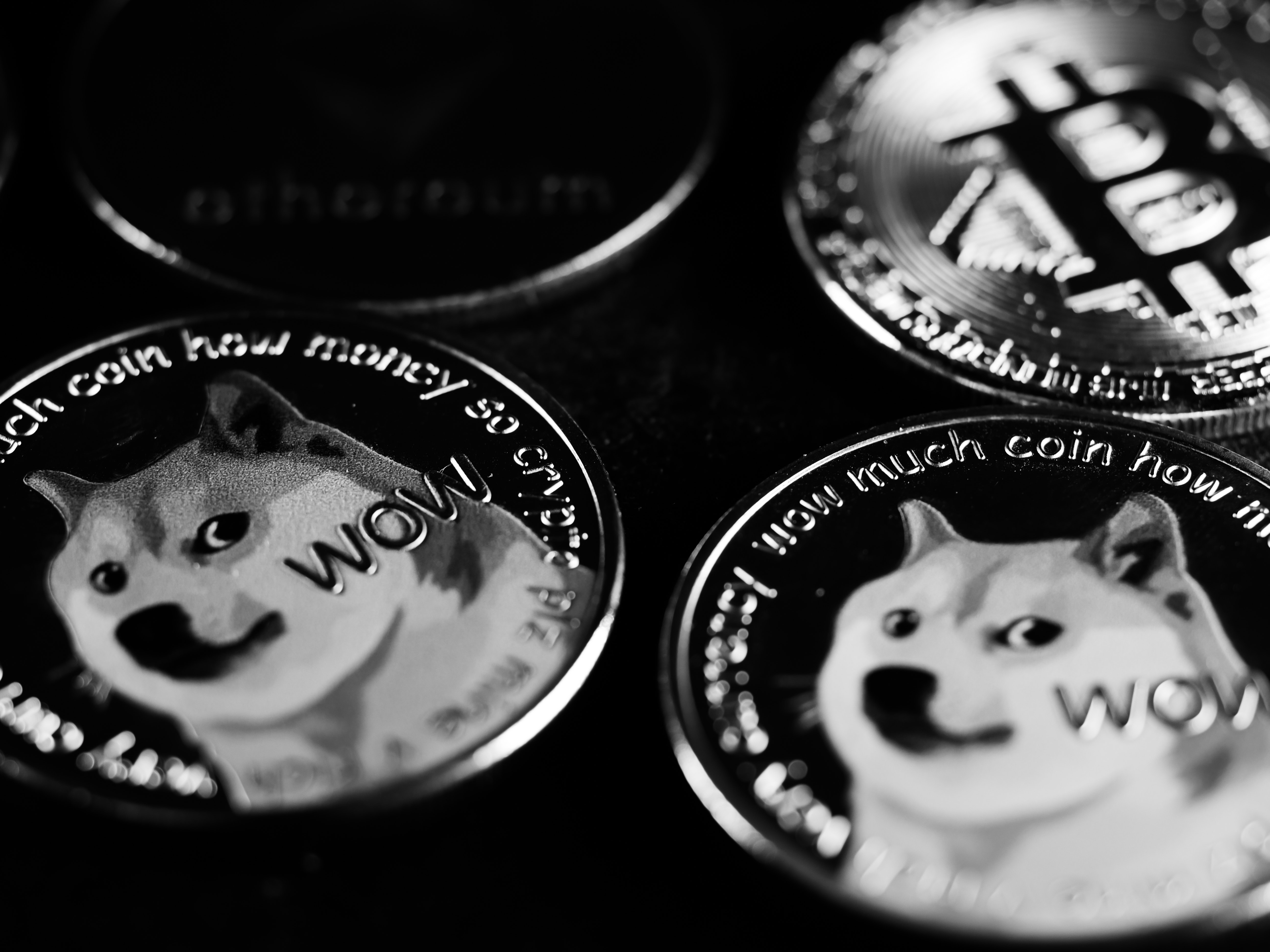
The purpose of this report is to offer a comprehensive assessment of Dogecoin as an investment opportunity. Drawing upon meticulous research, this analysis seeks to equip potential investors with a clear understanding of the underlying factors that may influence the future performance and sustainability of Dogecoin. This report is subject to time and was made on 10th May, 2023.
DogeCoin is a digital cryptocurrency that emerged in 2013, distinguished by its light-hearted and jovial nature. Inspired by an internet meme featuring the iconic Shiba Inu dog, Dogecoin quickly garnered attention and developed a dedicated community of supporters.
Technically speaking, Dogecoin is built on a blockchain, a decentralized ledger that ensures secure and transparent transactions. It operates similarly to other cryptocurrencies, utilizing cryptographic principles to validate and record transactions. However, Dogecoin’s distinguishing feature lies in its friendly and approachable branding, which sets it apart from its more serious counterparts.
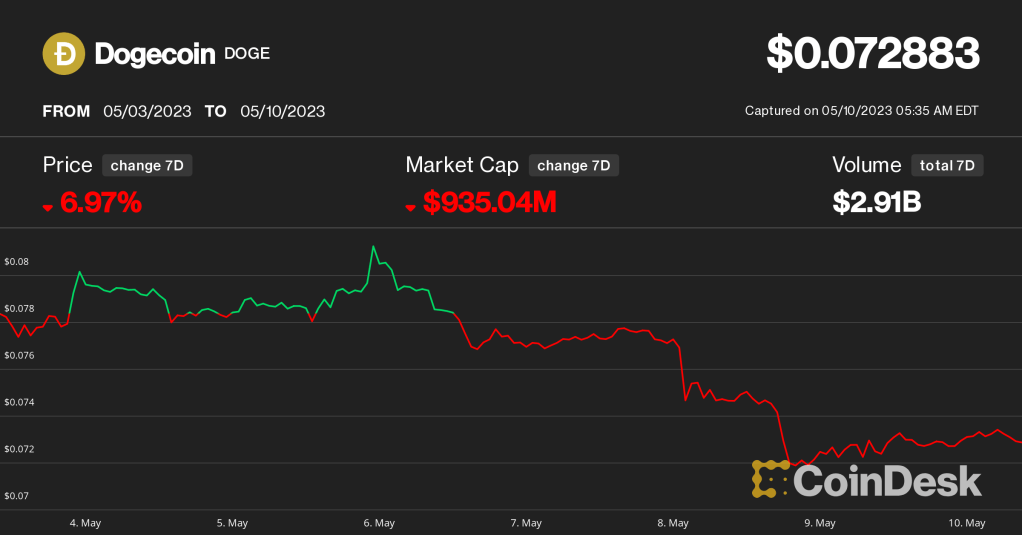
DOGECOIN STATS
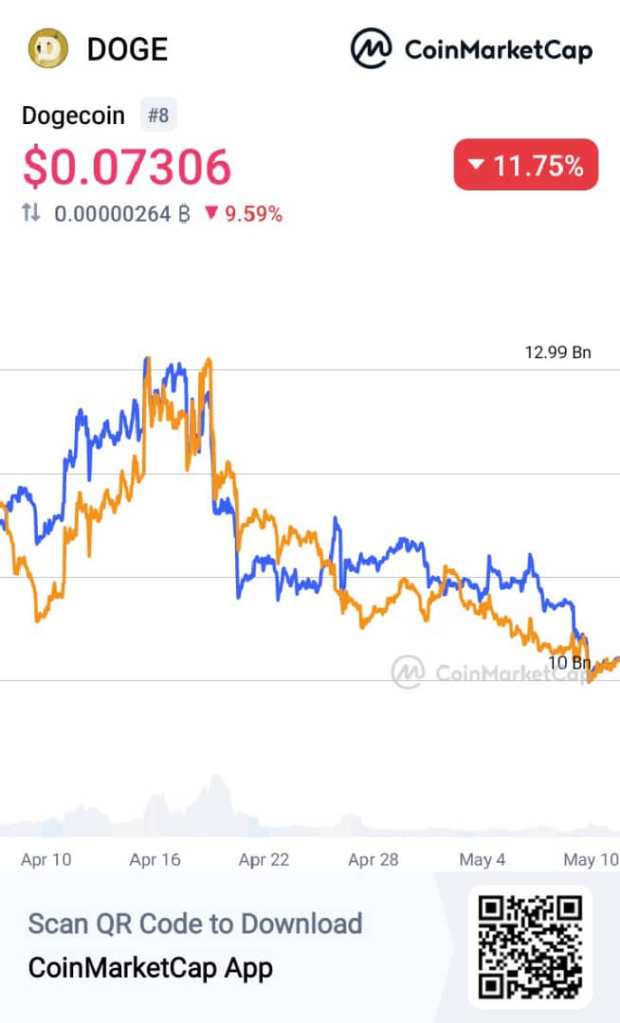
MARKET CAPITALIZATION OF DOGECOIN
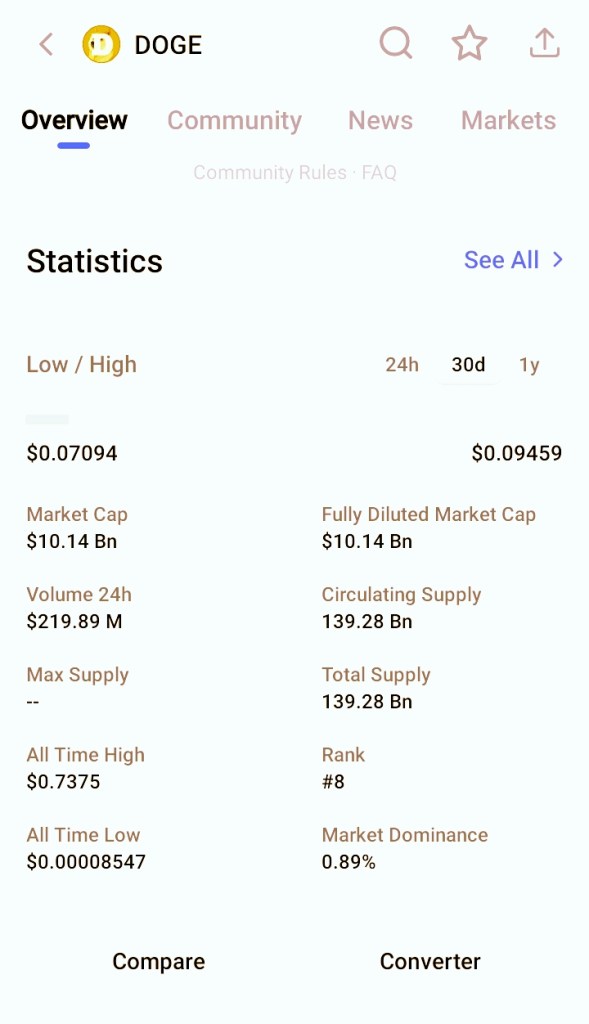
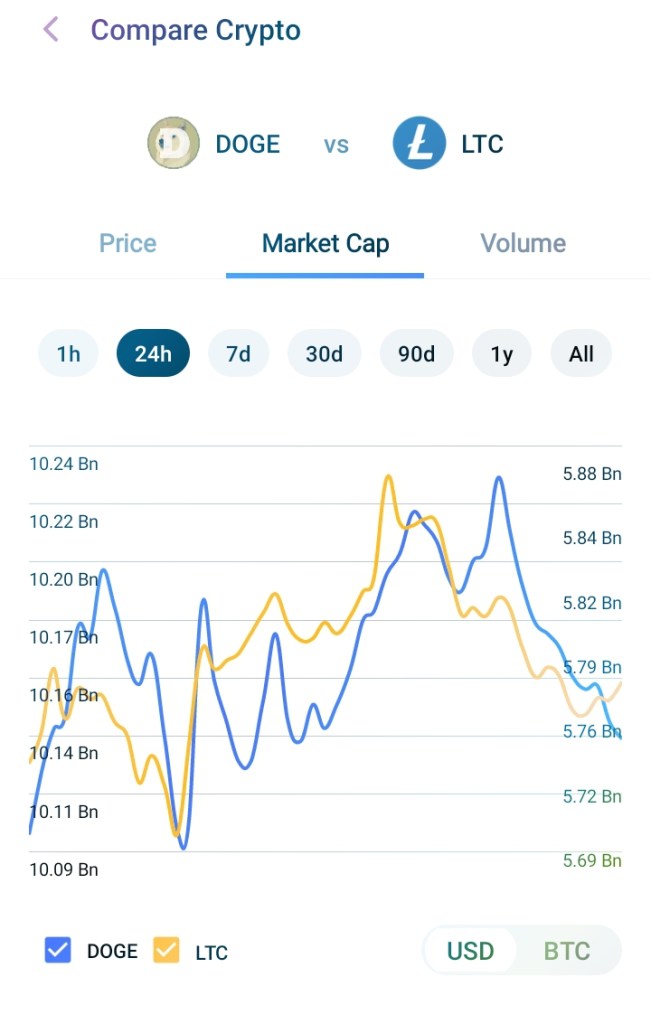
Doge’s Market Capitalization is pegged at $10.19 Bn(coin market cap). For potential investors, this figure provides some key insights and important considerations:
Size and Popularity: Dogecoin’s market capitalization reflects its position as one of the larger cryptocurrencies in the market. With its significant market cap, it has garnered attention and gained a substantial following.
Investor Interest: The market cap suggests that Dogecoin has attracted a considerable amount of investor interest and participation. It indicates that there is sufficient liquidity in the market, making it easier for investors to buy and sell Dogecoin tokens.
Volatility and Risk: Dogecoin has a high price volatility. A substantial market cap indicates a certain level of stability, but does not eliminate the inherent risks associated with investing in the coin. Potential investors should carefully evaluate their risk tolerance and consider diversifying their investment portfolio.
Growth Potential: Being pegged at $10.19 billion, Dogecoin’s market cap suggests that it has experienced significant growth since its inception. However, past performance does not guarantee future results.
TRADING VOLUME OF DOGECOIN
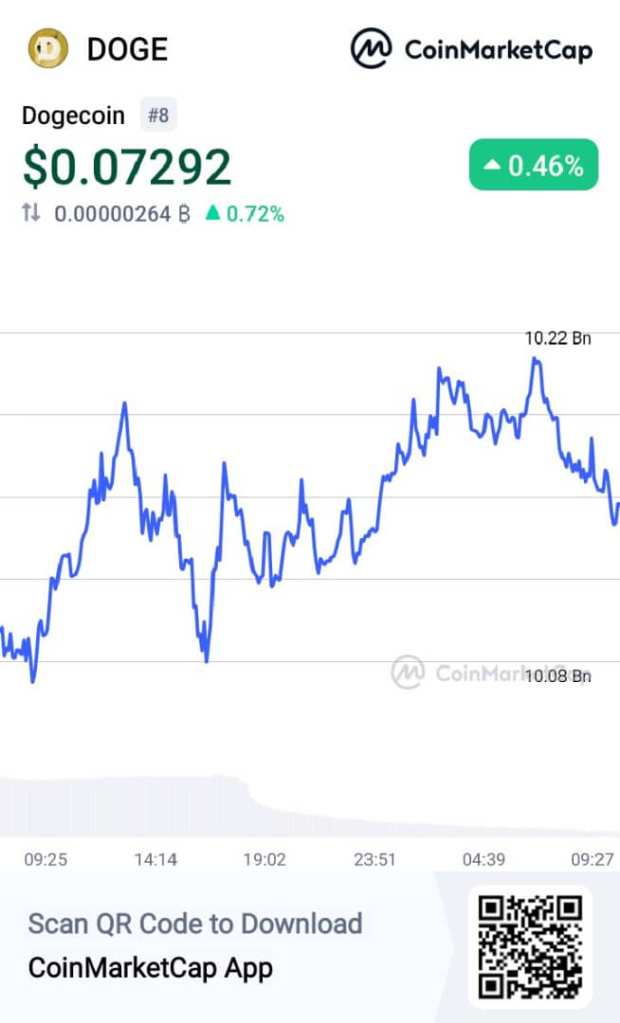
Dogecoin had a trading volume of $221.85 M, as of 10th May, 2023. This is suggestive of certain factors:
Market Activity: The trading volume of $221.85 million indicates a significant level of market activity for Dogecoin within the specified timeframe. This is evident of a robust interest and engagement from traders and investors in buying and selling Dogecoin.
Liquidity and Market Efficiency: A substantial trading volume signifies a relatively liquid market for Dogecoin. Potential investors can benefit from this liquidity, because it allows for easier entry and exit from positions without significant price impact. Notwithstanding, a liquid market generally indicates a higher level of market efficiency, facilitating smoother trade execution.
Market Sentiment: Increased trading volume is reflective of positive market sentiment, indicating heightened confidence and interest among investors. But complementing the trading volume analysis with other market indicators and news developments will help to gain a comprehensive understanding of the prevailing sentiment.
Price Discovery: The trading volume plays a vital role in price discovery and determination for Dogecoin. Higher trading volumes contribute to more accurate and efficient price determination as a result of increased buying and selling activity. This provides potential investors with better visibility into market dynamics and fair value assessment.
Investor Interest: The trading volume reflects the level of investor interest in Dogecoin. A higher trading volume indicates strong participation from market participants, suggesting a considerable investor base actively engaging with the cryptocurrency. This active investor interest may be indicative of a vibrant and committed community, which can influence market sentiment and potential growth opportunities.
DOGECOIN’S CIRCULATING SUPPLY
As seen on coin market cap, Dogecoin’s circulating supply is 139.28 Bn. This says a lot.
It raises concerns as to:
Fractional Ownership: Due to the substantial circulating supply, potential investors can acquire Dogecoin in fractional amounts. This fractional ownership allows for more flexibility and accessibility, as investors can purchase a smaller fraction of a token rather than whole units. For instance, an investor could acquire 0.1 Dogecoin instead of needing to purchase a whole unit.
Inflationary Factors: Dogecoin has an inflationary issuance schedule, meaning that new tokens are continuously created over time. Potential investors should be advised to consider the rate of token issuance and its potential impact on the circulating supply. For example, if the annual inflation rate is 5%, the circulating supply may increase by approximately 6.96 billion tokens in a year (139.28 billion * 5%).
Supply and Demand Dynamics: The large circulating supply of Dogecoin suggests a considerable quantity of tokens available for potential buyers and sellers in the market. It is however important to consider the interplay between supply and demand. A larger supply may initially indicate broader availability but the demand for Dogecoin will ultimately determine its price trajectory.
Long-Term Dynamics: The size of the circulating supply is a crucial factor to assess when considering the long-term dynamics of Dogecoin. It is advisable for potential investors to evaluate any mechanisms in place to manage the supply, such as burn or token lock-up programs. These mechanisms impact the circulating supply and potentially influence price dynamics.
Market Capitalization: The circulating supply of Dogecoin, which stands at 139.28 billion, plays a significant role in determining its market capitalization. To calculate the market capitalization, investors should multiply the circulating supply by the current market price of Dogecoin. For example, if the market price is $0.30 per Dogecoin, the market capitalization would be approximately $41.78 billion (139.28 billion * $0.30).
Comparative Analysis: When evaluating Dogecoin’s circulating supply, it should be compared with other cryptocurrencies, particularly those within the same market segment or with similar functionalities. This comparison allows for a better understanding of how Dogecoin’s supply aligns with industry standards and competitors’ offerings.
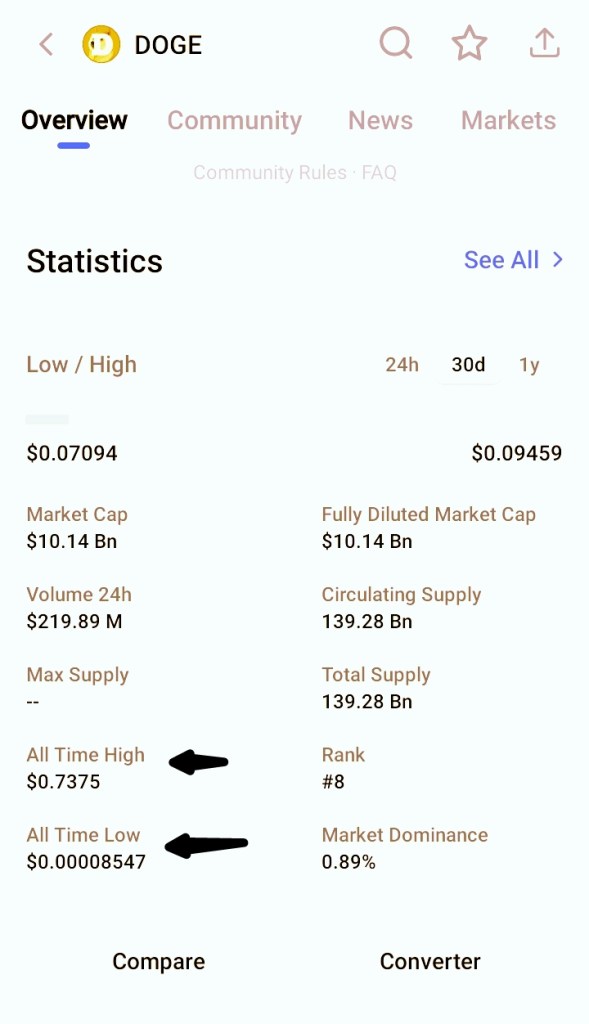
Dogecoin has a Market dominance of 0.89% and a market rank of 8. The total number of unique addresses that hold assets in the network also known as “Holders” are 4.84 million. In the past 24 hours it has had an all time high of $0.07241 and an all time low of about $0.07344. Its generic all time high is $0.7375 and all time low is $0.00008547
Dogecoin is based on the technology of Litecoin, which itself is a cryptocurrency that originated from Bitcoin. Both Dogecoin and Litecoin use a decentralized peer-to-peer network, employ a proof-of-work consensus algorithm, and utilize blockchain technology.
TECHNICAL ASPECTS OF DOGECOIN
Blockchain: Dogecoin’s blockchain is a public ledger that records all transactions in chronological order. It serves as a decentralized and transparent database maintained by a network of nodes. The blockchain ensures the security, integrity, and immutability of Dogecoin transactions.
Proof-of-Work (PoW): Dogecoin, like Bitcoin and Litecoin, uses a proof-of-work consensus mechanism. Miners compete to solve complex mathematical puzzles to validate transactions and add new blocks to the blockchain. This process requires significant computational power and energy consumption.
Scrypt Algorithm: Unlike Bitcoin, which uses the SHA-256 hashing algorithm, Dogecoin employs the Scrypt algorithm. Scrypt was chosen to make mining more accessible to a broader range of hardware, discouraging the concentration of mining power in specialized mining equipment (ASICs) and promoting a more decentralized network.
Block Time and Supply: Dogecoin has a faster block time compared to Bitcoin. New blocks are added to the Dogecoin blockchain approximately every minute, allowing for faster transaction confirmations. Additionally, Dogecoin has no maximum supply limit, and a large number of coins are released into circulation through mining rewards.
Community and Development: Dogecoin has garnered a strong and enthusiastic community of supporters who have contributed to its development and adoption. The community often engages in charitable initiatives and micro-tipping, which has been a distinguishing characteristic of Dogecoin’s culture.
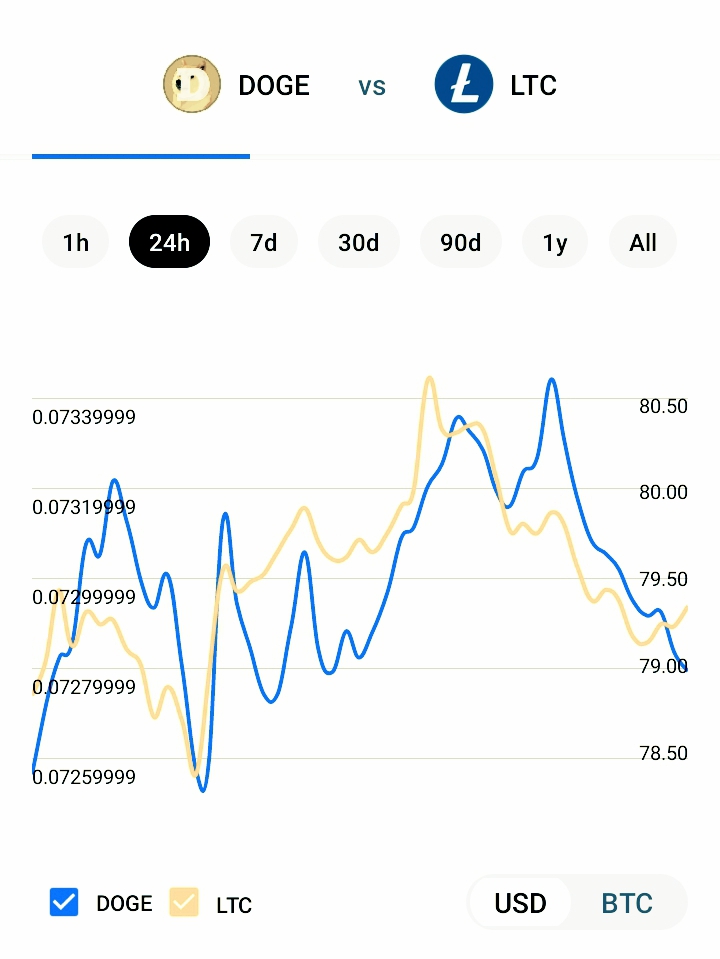
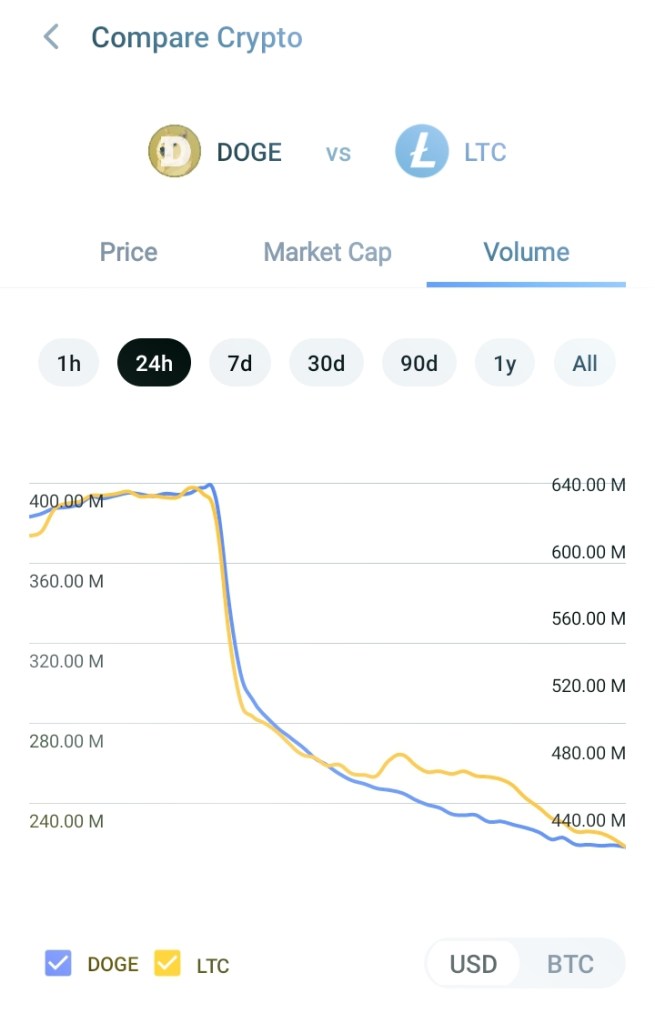
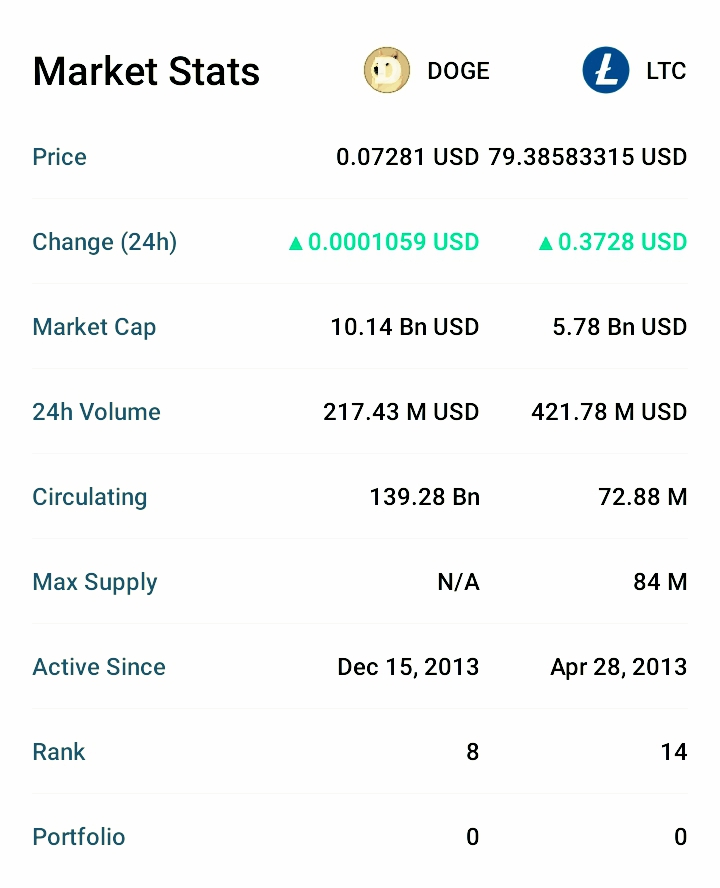
COMPARATIVE ANALYSIS OF DOGECOIN AND LITECOIN ( as of 10th May, 2023)
Price:
Volume:
Market Capitalization:
MARKET STATS:
SWOT ANALYSIS OF DOGE COIN
STRENGTHS:
• Community and Branding: Dogecoin has developed a strong and dedicated community of supporters, primarily driven by its light-hearted and meme-inspired branding.
• High Liquidity: Dogecoin has relatively high trading volumes and liquidity compared to many other cryptocurrencies, making it easier to buy, sell, and trade.
• Low Transaction Fees: Dogecoin has historically had low transaction fees, making it attractive for micro-transactions and everyday use.
WEAKNESSES:
• Lack of Differentiation: Dogecoin lacks significant technological differentiators when compared to other cryptocurrencies, which may hinder its long-term viability.
• Limited Use Cases: While Dogecoin has gained popularity, its practical use cases and real-world adoption are relatively limited compared to more established cryptocurrencies like Bitcoin or Ethereum.
• Dependency on Key Individuals: Dogecoin’s development and direction have been reliant on a few key individuals, which could introduce governance and leadership risks.
OPPORTUNITIES:
• Increased Adoption: Dogecoin has the potential for wider adoption as a means of exchange, especially considering its low transaction fees and established community.
• Integration with Payment Systems: Partnering with payment processors or integrating Dogecoin into existing platforms could enhance its usability and acceptance in everyday transactions.
• Social Media Integration: Dogecoin’s meme culture and strong social media presence present an opportunity for further engagement, awareness, and growth.
THREATS:
• Market Volatility: The cryptocurrency market, including Dogecoin, is highly volatile, and significant price fluctuations can impact investor sentiment and overall adoption.
• Regulatory Concerns: Increased scrutiny and regulations from governments and financial institutions may impose restrictions or create uncertainties for Dogecoin and the cryptocurrency market as a whole.
• Competition: Dogecoin faces competition from a wide range of cryptocurrencies, each with their own strengths and unique features. The ability to stand out and maintain relevance in a competitive market is a challenge.
An analysis of the coin utility of DOGECOIN:
Peer-to-Peer Transactions:
Dogecoin enables fast and low-cost transactions between individuals without the need for intermediaries. This utility suggests that Dogecoin can be used as a decentralized digital currency for everyday transactions, which may appeal to investors who believe in the potential of cryptocurrencies as a replacement for traditional fiat currencies.
Tipping and Microtransactions:
Dogecoin has a strong culture of tipping and microtransactions, particularly in online communities and social media platforms. This points out to the fact that Dogecoin has the potential to capture a niche market where small-value transactions and appreciation for content creators are important. Investors might view this as an indication of community engagement and potential growth in user adoption.
Charitable Initiatives:
The Dogecoin community has actively participated in charitable endeavors, supporting various causes and fundraising efforts. It is therefore safe to say that Dogecoin has a unique aspect of social impact and community involvement, which may attract socially conscious investors looking for cryptocurrencies with a positive and altruistic reputation.
Store of Value:
Some individuals hold Dogecoin as a speculative investment or as a potential store of value, hoping that its adoption and demand will increase over time. This is reflective in that investors may view Dogecoin as a potential asset for capital appreciation, similar to other cryptocurrencies. However, it’s important to note that Dogecoin’s volatility and lack of a capped supply may introduce additional risks and considerations for investors.
CONCLUSION AND RECOMMENDATION
Conclusively, potential investors of Dogecoin should always consider the following:
Market Adoption: Assess the level of adoption of Dogecoin as a means of payment, both within online communities and in mainstream commerce. Greater adoption may indicate increased utility and potential for long-term growth.
Community Engagement: Evaluate the strength and activity of the Dogecoin community. Community-driven initiatives and ongoing development efforts can contribute to the growth and sustainability of the cryptocurrency.
Risk Assessment: Understand the risks associated with investing in cryptocurrencies, including Dogecoin. Consider factors such as market volatility, regulatory developments, and competition from other cryptocurrencies that offer similar features.
Diversification: As with any investment, diversifying a portfolio is crucial to mitigate risk. Consider investing in a range of assets, including cryptocurrencies, to spread the risk and balance potential returns.
Professional Advice: Seek advice from financial professionals or experts in the cryptocurrency space who can provide personalized guidance based on your investment goals, risk tolerance, and overall financial situation.
Finally, It is crucial to bear in mind that cryptocurrency investments are subject to market volatility, regulatory dynamics, and inherent risks. The cryptocurrency market can be unpredictable, and past performance should not be regarded as indicative of future outcomes.
Consequently, conducting thorough research, exercising caution, and making well-informed decisions are indispensable components of a prudent investment strategy.
In simple terms: “Remember, investing in cryptocurrencies involves inherent risks, and it is essential to conduct thorough research, exercise caution, and make informed decisions based on your own analysis and risk appetite”
 legally